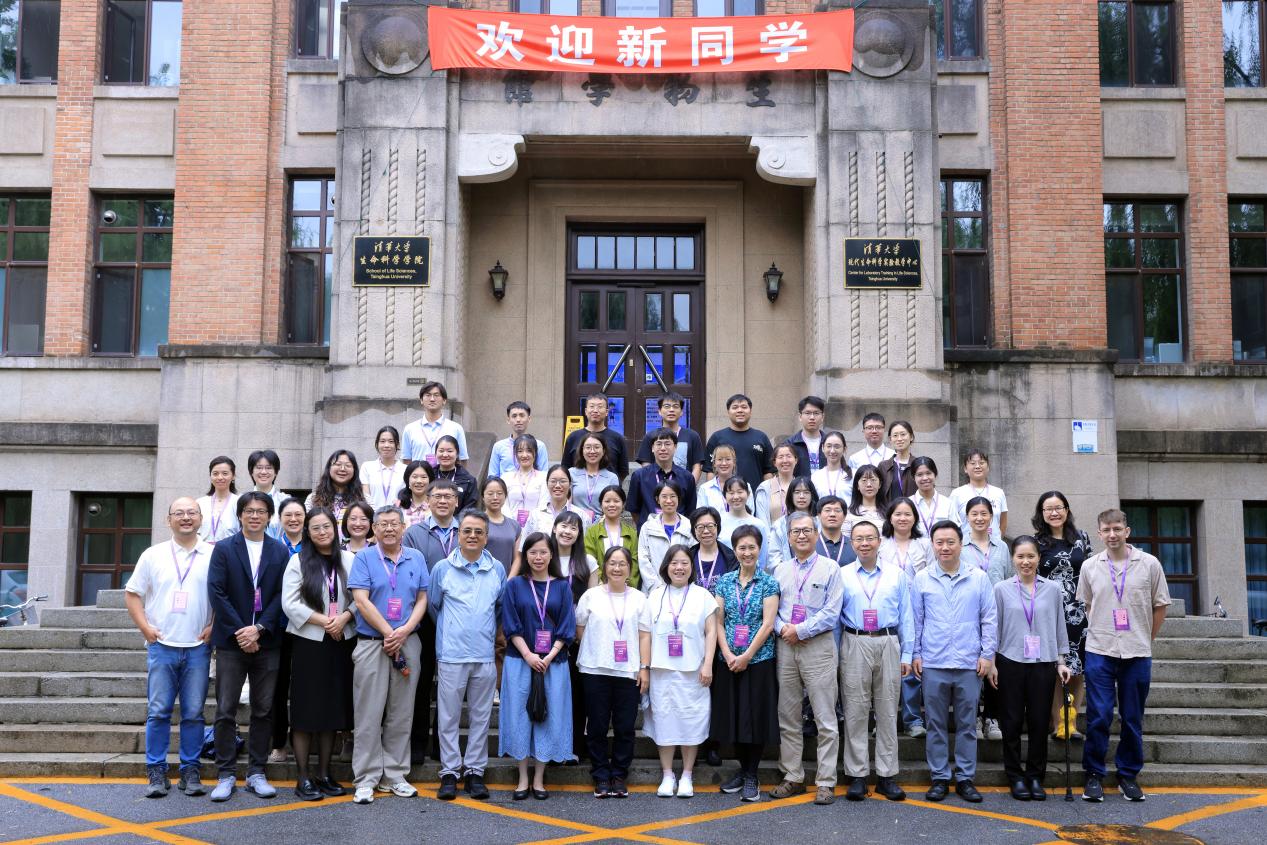
On August 28, the School of Life Sciences at Tsinghua University hosted the “2026 Cross-Strait Symposium on Cell Structure and Behavior” at the Life Sciences Building. The event centered around leading topics such as cytoskeleton dynamics, organelle interactions, and the molecular mechanisms and advanced technologies underpinning cell migration and polarity. Its aim was to establish a premier platform for academic exchange in cell biology between scholars from both sides of the Taiwan Strait. The conference drew participants from Tsinghua University, National Tsinghua University in Hsinchu, National Taiwan University, Yang-Ming Chiao Tung University, Cheng Kung University, Academia Sinica, Taiwan Bio-Modeling Center, as well as Peking University, China Agricultural University, and Capital Medical University, among other institutions.
Tsinghua University’s Vice President, Wang Hongwei, attended and welcomed the attendees, expressing warm hospitality towards the Taiwanese delegation and emphasizing the importance of collaborative intellectual engagement to propel advancements in cell biology. Wang Xinquan, the Party Secretary of the School of Life Sciences, also extended a welcoming address.
The conference was collaboratively organized by Professors Pan Junmin and Liang Xin from Tsinghua’s School of Life Sciences, and Taiwanese colleagues Wei Yingwan and Lin Yujun. The program included keynote lectures, thematic presentations, academic discussions, and a poster session.
During the morning session, seven experts, including Zhong Bangzhu (Taiwan Bio-Modeling Center), Fu Xiaoyu (Tsinghua University), Liang Xin (Tsinghua University), Lin Yujun (National Tsinghua University), Ou Guangshuo (Tsinghua University), Wang Huijing (National Tsinghua University), and Wang Ouli (National Tsinghua University), presented on topics ranging from cilia assembly regulation and zebrafish cerebellar development to the cryo-EM structure of the Arp2/3 complex and the coupling mechanism between neuronal microtubules and the cell membrane.
The afternoon session featured twelve scholars, including Wang Zongxing (National Taiwan University), Li Dong (Tsinghua University), Wei Yingwan (Institute of Molecular Biology, Academia Sinica), Fu Jingyan (China Agricultural University), Wang Wanjing (Yang-Ming Chiao Tung University), Ji Yawei (Taiwan Health Research Institute), Tang Mingzhe (Cheng Kung University), Huang Shankin (Tsinghua University), Pan Junmin (Tsinghua University), Liang Yinwen (Capital Medical University), and Wu Xiaotong (Tsinghua University), who shared their latest findings on various subjects such as responsive molecular probes, multimodal structured illumination microscopy, the role of centrosomal protein SSNA1 in cilia formation and male fertility, the assembly of centriolar peripheral materials, centrosome-autophagy pathway interactions, nuclear membrane proteins in aging, matrix rigidity in tissue regeneration, microfilament regulation in pollen tube growth, cilia structure and disorders, key transcription factors in cilia formation, and mechanisms of reproductive cell development. Additionally, Tang Shan, the editor of the journal Cells, outlined the publication process and review system of the journal.
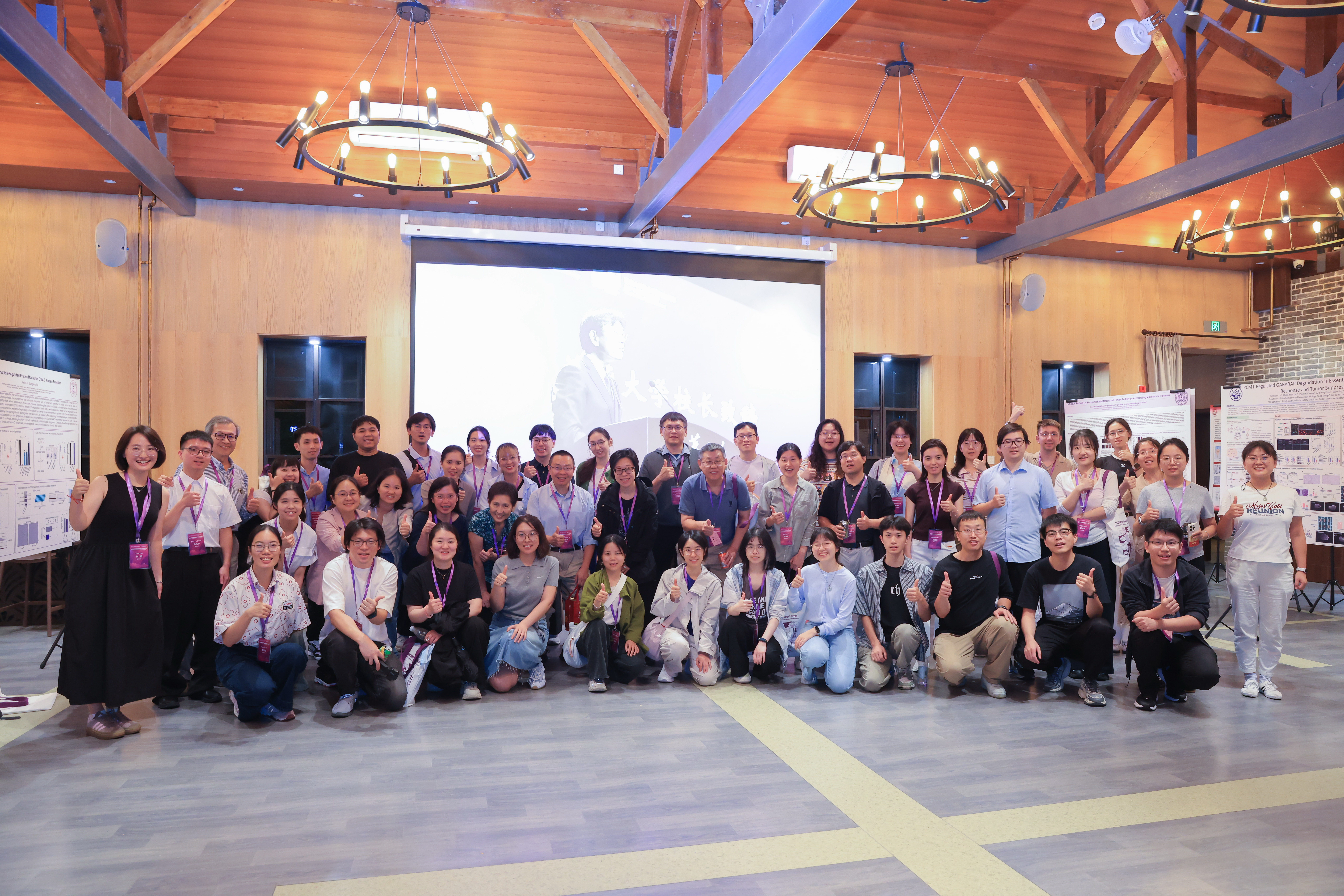
The poster session, held in the evening at Tsinghua’s North Dormitory, saw nearly thirty postdoctoral researchers and doctoral students from both sides of the strait presenting their research on the cytoskeleton and motor protein dynamics, cilia function, super-resolution imaging, and optogenetic/sonogenetic tool development, fostering vibrant discussions.
The conference significantly enhanced academic collaboration in cell biology across the Taiwan Strait and was instrumental in fostering innovative research and talent development in the field.